For an investor considering Bulgaria, the choice is often not simply between two properties. It is a choice between two different strategies. A completed apartment or house can start working sooner, while a land plot usually requires more time but offers more room to create value if the location, documentation, and development potential are chosen correctly.
Completed property is generally easier to assess, easier to finance, and quicker to put on the rental or resale market. Land requires more due diligence, more patience, and a clearer plan. But in a developing location, a well-chosen plot can become the basis for a future home, a small development project, or a more promising long-term investment.
For Varna and the surrounding region, this question is especially relevant. The market includes city apartments, houses by the sea, suburban homes, regulated plots, agricultural land, and larger development sites. All of these can be called real estate, but from an investor’s perspective they have different characteristics and require different approaches to evaluation.
First, define the investment objective
Before comparing land with completed property, an investor should answer one simple question: what role should this asset perform?
If the goal is rental income, a completed apartment or house may be the better choice. Such a property is easier to inspect, evaluate, furnish, rent out, and maintain. The investor can more easily calculate income, maintenance costs, and demand.
If the goal is capital growth, land may be more attractive because a plot in the right location can increase in value as infrastructure improves, urban planning becomes clearer, utilities are introduced, and the surrounding area develops. However, this value does not usually appear by itself and depends both on the quality of the plot and on the work carried out before and after the purchase.
If the goal is development, land is generally the more suitable option. In this case, the investor looks not only at the size of the plot, but at what can actually be built, at what scale, how long the route to completion may take, and whether there will be demand for the finished project.
Completed property: clearer and faster, but with less room for change
Completed property is usually easier for a foreign investor. The building already exists, the layout can be seen, and the location can be assessed on site. The buyer can compare similar properties, estimate renovation costs, and evaluate the rental or resale market.
This is one of its main advantages. A completed apartment or house can often start delivering value sooner. The property can be rented out, used personally, lightly renovated, or resold without waiting for urban planning procedures. For many investors, this matters because their capital is not tied up for a long period inside a complex project.
However, completed property also has limitations. Most of its value has already been created before you enter the investment. The location, construction quality, layout, common areas, parking, energy efficiency, and arrangements for access to shared parts of the building are already built into the property. An investor can improve some details, but cannot change everything.
There are also hidden risks. A property may look attractive but have high maintenance costs, poor building management, low construction quality, unclear parking arrangements, difficult access, or lower real rental demand than expected. In older buildings, renovation may cost more than planned. In newer buildings, the price may already include a large share of the expected future growth.
Completed property is generally better suited to investors who want a more understandable asset, a shorter path to use or rental income, and less involvement in design and construction.
Land: greater potential, but greater responsibility
Land is a different type of investment. It usually does not generate quick income. It requires analysis, time, a clear next step, and often the support of a partner who understands the local market well. But this is also why land can be attractive: an investor may be able to create value where the market has not yet fully priced in the potential.
A good plot can become significantly more valuable if transport access improves, utilities become available, building parameters become clearer, or the surrounding area develops. In some cases, an investor can increase the value of a plot by preparing it for the next stage together with the right partners: checking the documents, clarifying the status, working with architects, understanding the real buildable area, and making the property clearer and more attractive to a future buyer or development partner.
The risk is that land may look simple at first but prove more complicated in practice than expected. A plot may have a beautiful view and a good price, yet still be difficult to use. The road may not be legally established. Water or electricity may be far away. The terrain may increase construction costs. The urban planning status may not allow the project the investor originally had in mind.
That is why the key question is not only how large the plot is. It is important to understand what can actually be built on it and how realistic that path is in practice.
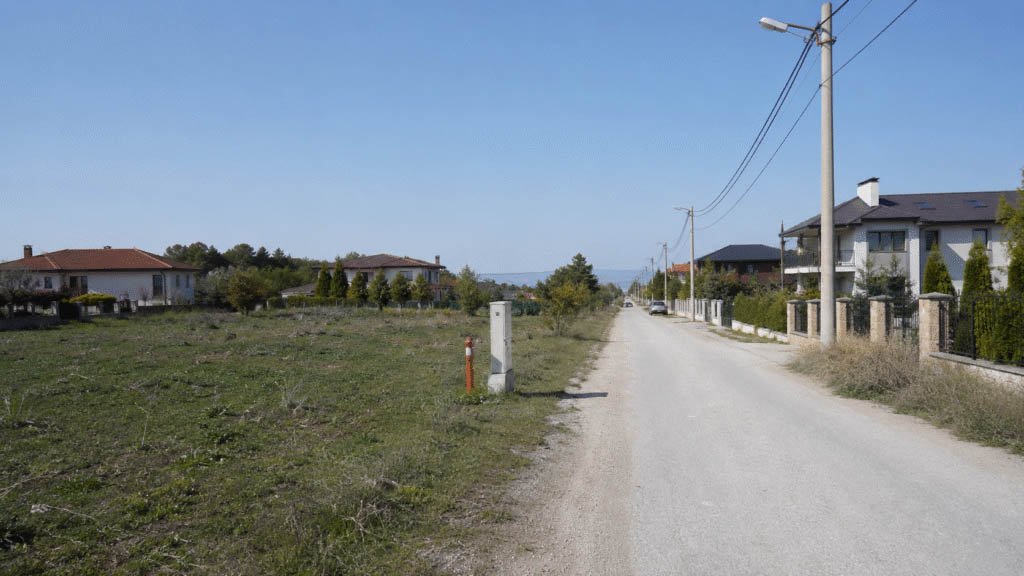
What is especially important when buying land
The first thing to check is the legal status of the land. Is it a regulated plot (UPI) or agricultural land? Is residential construction permitted? Is there a PUP, or Detailed Development Plan? What do the building parameters allow?
The second point is access. A plot without proper road access can become a serious problem. It may be difficult to build on, difficult to sell, and difficult to finance. Access should be checked not only on the map, but also in the documents and on site.
The third point is utilities. Electricity, water, sewerage, internet, and road infrastructure can significantly change the real cost of the investment. If connecting to the networks is difficult, time-consuming, or lacks clear conditions, the cost of preparing the plot can increase substantially.
The fourth point is the real development potential. Investors often focus on the total land area, but the usable development potential may be much smaller. Setbacks, height restrictions, site coverage, development intensity, landscaping requirements, terrain, and access all affect what can actually be built.
The fifth point is the future of the surrounding area. A plot does not exist separately from its surroundings. Future roads, neighboring development, zoning, infrastructure, and demand will all affect its value.
Land and completed property: the key difference for an investor
Completed property is more often associated with value that already exists. Land is associated with future value.
With a completed property, the investor evaluates what is already there: the building, layout, condition, rental potential, maintenance costs, and resale market. Risks still exist, but they are easier to see.
With land, the investor evaluates what may become possible. This is more complex. The legal status, urban planning, access, utilities, terrain, and demand all need to be reviewed. Potential returns may be higher, but only if the plot has a clear development outlook.
The best choice depends on the investor’s time horizon, attitude toward risk, budget, and willingness to manage the next stages.
What EU investors should consider
EU citizens can generally purchase real estate and land in Bulgaria directly, without establishing a local company. This makes market entry relatively straightforward compared with some other destinations.
However, the legal ability to purchase a property is only the beginning. The investor should focus on the key checks: ownership history, encumbrances, urban planning status, access, and utilities. These are the factors that show whether the property can actually be used and how profitable it may be.
Bulgaria’s transition to the euro makes it easier to compare prices and returns with other EU markets, but local specifics remain important. Two neighboring properties may differ significantly in value because of documentation, infrastructure, and development potential.
Conclusion
Land and completed property can both be good investments in Bulgaria, but they suit different objectives.
Completed property is generally better suited to investors who want a more understandable asset, faster access to use, easier comparison, and potential rental income. Land is more often suitable for those who have more time, are looking for development potential, are prepared to check the details carefully before buying, and are targeting potentially higher returns.
In Varna and the surrounding region, the strongest opportunities are often not obvious at first glance. A completed property can be attractive if the location, building quality, and rental potential are strong. A plot can be promising if its status, access, utilities, and urban planning potential are clear.
If you are considering an investment in Bulgaria and choosing between land and completed property in Varna or the surrounding region, BulgarHouse can help you go through the process correctly and safely. We will review the documents, assess the location, access, cadastre, and building parameters, analyze the investment logic, and help you avoid common mistakes. Our goal is to help you make a well-informed decision and achieve your objectives, whether that means purchasing a completed asset, building a home, making a secure investment, or developing a project, with everything handled correctly and within the law.